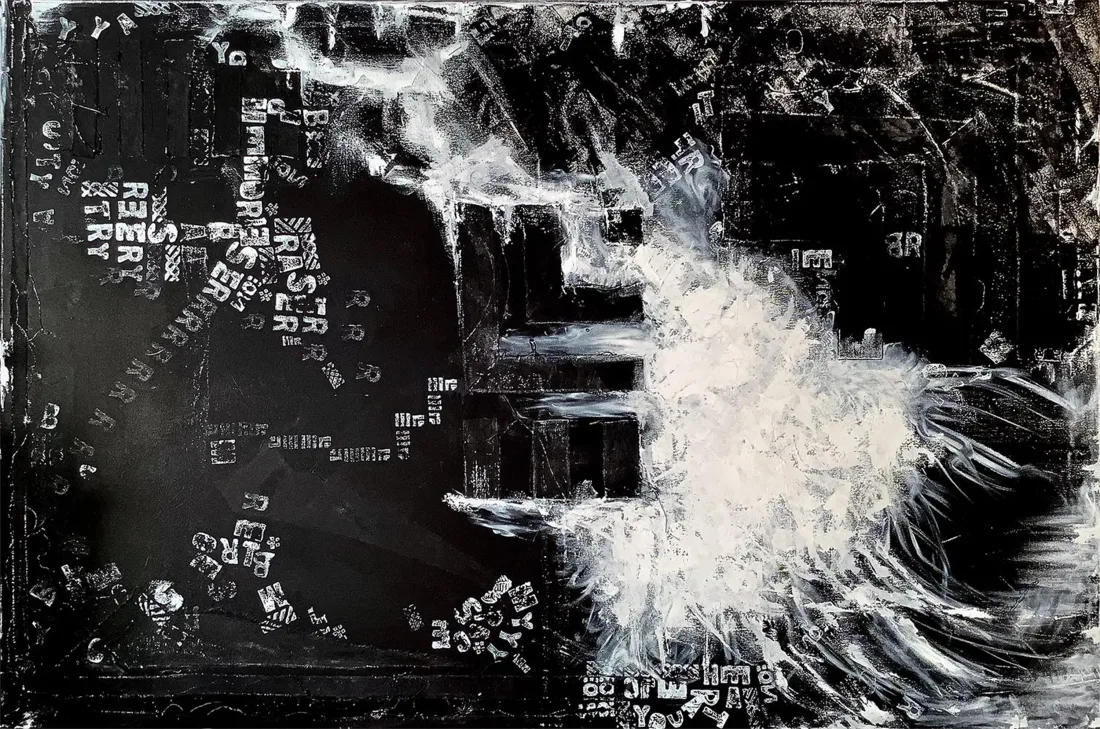
Bad Memory Eraser
2019 · 100 × 150 cm
Words like bullets — don’t fire your weapon randomly
Graphology
Words like bullets — don't fire your weapon randomly.
In the Graphology series, Pfishova treats the letter as the smallest unit of thought — and as an instrument of power. The mark becomes at once weapon and evidence: every word carries the force of an intention, and every trace testifies to the one who made it.
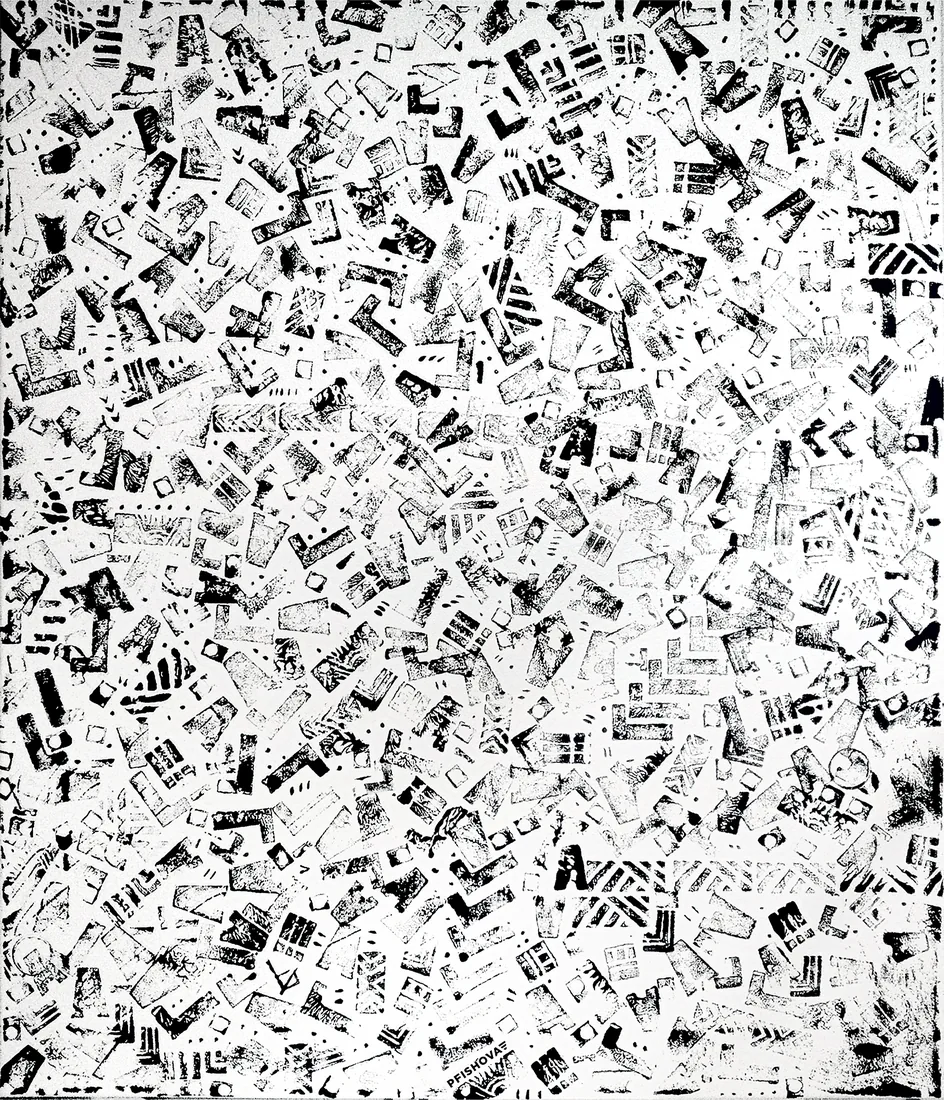
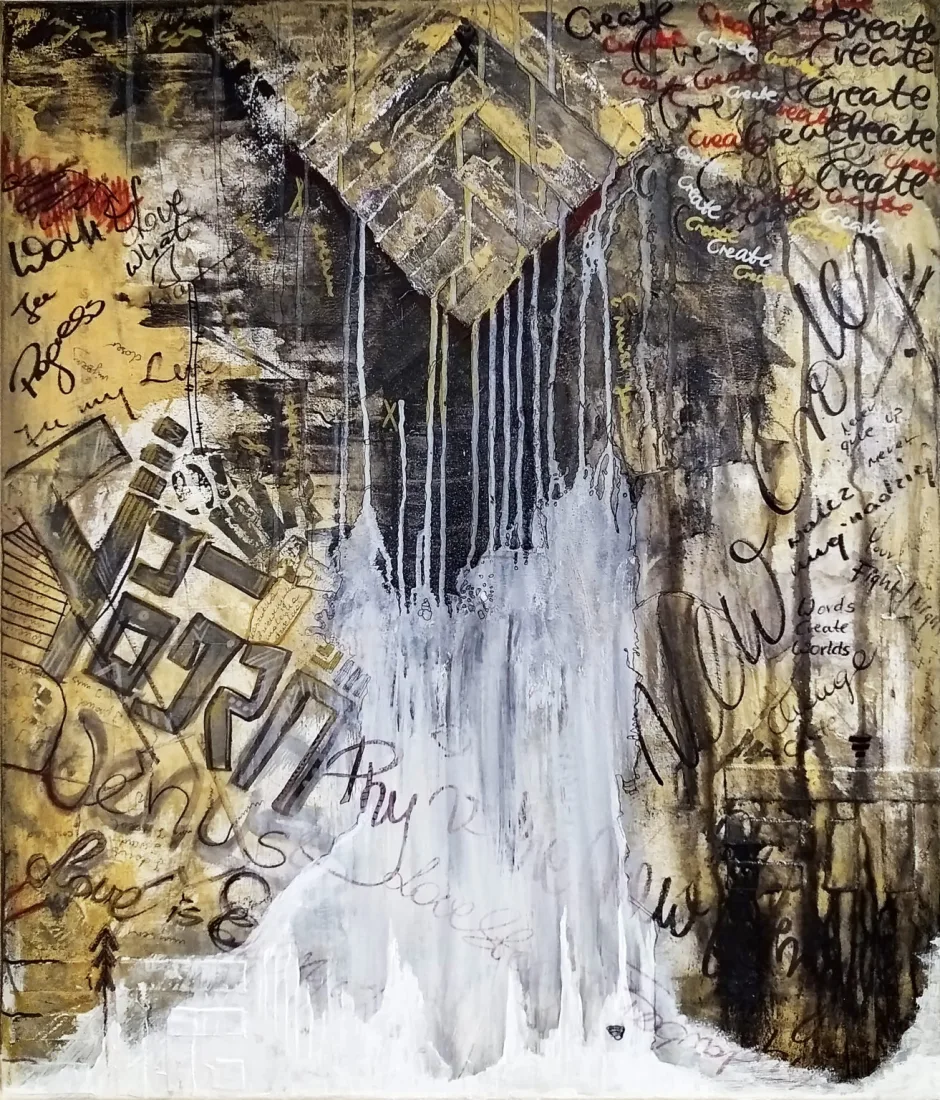
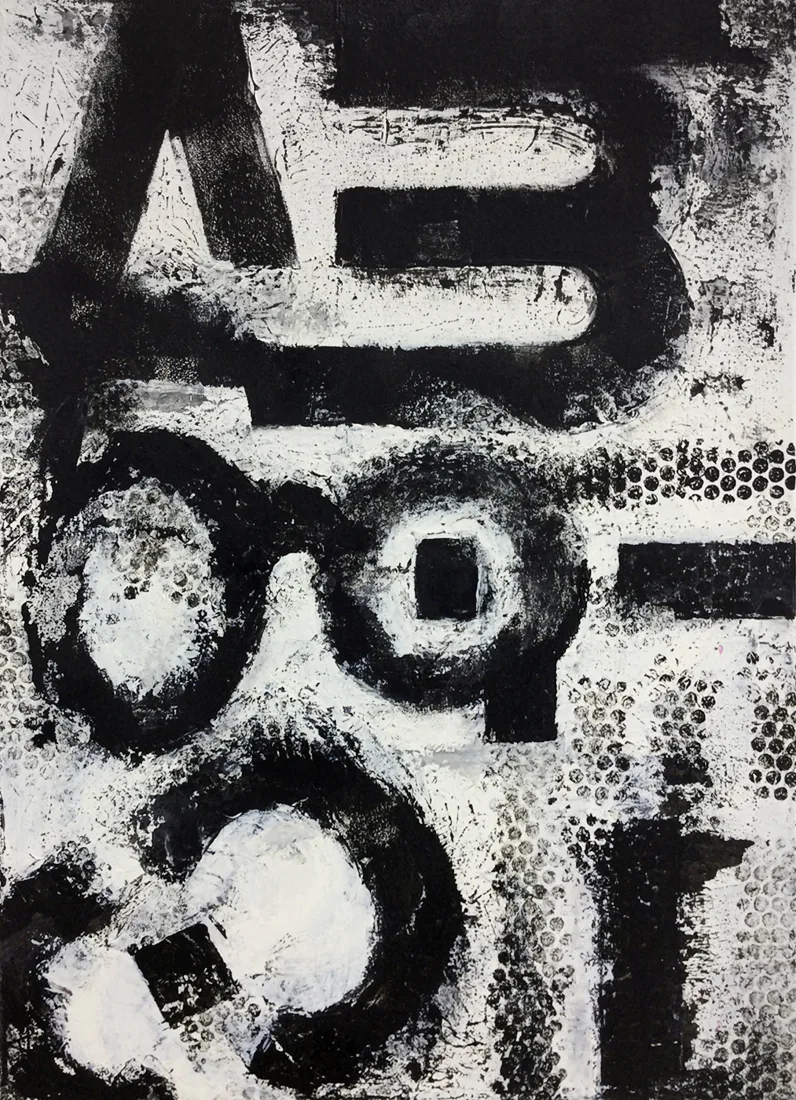
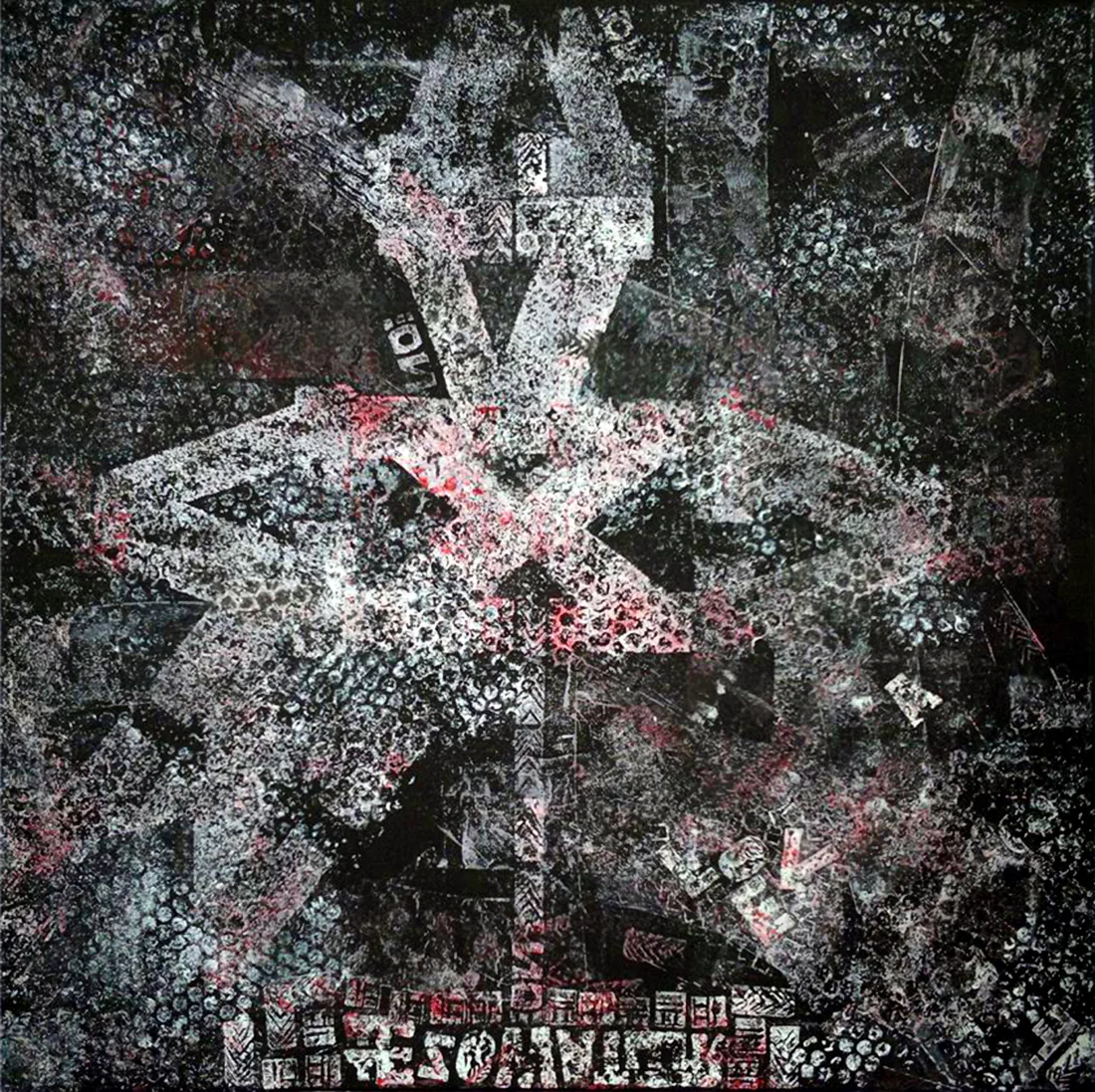
Each character on the canvas was hand-carved by the artist into matrices and type, then pressed onto the surface — in the spirit of the earliest printmaking crafts: woodcut, linocut, relief and intaglio. It is a deliberate homage to the old masters of the press, among them Albrecht Dürer, carried into the language of contemporary painting. The act of carving and impressing gives the letters the weight of things — no longer notation, but matter.
Stamped, fractured and multiplied, the signs are driven past the threshold of legibility. Language dissolves into a dense field of marks in which the message stops meaning and begins to testify. This is the moment where thought becomes act, and act becomes flesh: the word materialises and stays between us like an inscription, a verdict, an oath.
Graphology is a study of the power and the limits of what we think, say and set loose upon the world — of freedom and its control, of intention and its consequence. Writing reveals itself as the instrument through which power names, orders and interrogates us — and here it is caught in the act: between creation and destruction, confession and concealment.
Graphology treats the letter as both weapon and evidence: every word carries the force of an intention, and every mark testifies to the one who made it. In Pfishova’s hands language is stamped, fractured and multiplied until it can no longer be read — thought caught at the threshold where it becomes act, and act becomes trace, becomes flesh.